







EP. 05Coming Soon

The Nervous System

Nothing is wrong with you. You’re just wired differently, and what you’ve been calling self-medication is actually intelligent nervous system regulation.
You’ve done the therapy. You’ve tried the medications: the SSRIs that made you feel flat, the labels that kept changing. Anxiety. Then depression. Then maybe bipolar II. Then PTSD. Each new diagnosis quietly confirmed the same fear: that the problem is you.
So you found your own way to cope. A glass of wine to turn down the volume at night. Cannabis to come down from the noise of the day. Not because you’re an addict, but because it’s the only brake your nervous system has ever found.
At work you perform “normal” so well that no one would believe how much it costs you. That’s the most exhausting part. Not the work. The performance.
people treated for depression will quietly tell you they feel worse. Those three are my people.
That’s not evidence you’re the problem.It’s evidence you were missed.
And what you’ve been calling self-medication is actually intelligent nervous system regulation.
A reactive, high-performance nervous system isn’t a disorder. It’s a different engine. No one ever told you what kind of engine you have.

The Book
The full reframe: why you were missed, and the five populations the mainstream keeps failing to see. A clinical map for coming home to how you are actually wired.

The Industry-Insider
I was a medical student in Pakistan, headed for surgery. Instead I struggled, and my own psychiatrists told me they couldn’t help me. They discharged me. I was labeled treatment-resistant.
If they couldn’t figure it out, I would. I became a psychiatrist, not to join the system, but to find out where it broke. I trained in the United States. For a long time, on the inside, I was an activist furious at it.
I spent years searching where standard psychiatry never looks: nervous system science, parts work, and the modalities no one had told me existed. Some of it helped. None of it was the whole answer, until the pieces fit.
It came clear: what I had wasn’t a chemical imbalance. It was a protective shutdown from developmental trauma no one had asked the right questions to find. I had to do the deeper work just to remember it.
It uses a checklist: are you depressed? are you sleeping? are you eating? It asks what’s wrong with you. It never asks what happened to you. That one word makes all the difference.
You think you’re anxious. You’re not. You have a high-performance engine, and you’ve driven it in first gear your whole life, because no one ever told you what you were built to do.
Depression often isn’t a chemical imbalance. It’s your nervous system deciding that fighting wasn’t working, so it plays dead to keep you alive. That’s not a disorder. That’s survival.
You don’t have to fix anything. Healing is often as simple as taking out the knife that was sticking in, and letting your own system do the rest.
The 5 R’s. Real work, over six to eighteen months. Not a hack. Not a pill. A path.
The shift from “What’s wrong with me?” to “Oh. I was never seen.” You finally understand your own wiring.
Trading substances for nervous system science. Building the capacity to regulate without numbing.
Healing the relational and developmental wounds underneath, through parts work the mainstream misses entirely.
Unmasking. Learning to stop performing “normal” and discover what you actually value, need, and want.
Designing a life, a career, and an environment that fits your actual neurology. Purpose from wholeness, not escape.

of clinical practice, inside the system
board-certified psychiatrist
no one else integrates

A board-certified MD who unifies three things never brought together under one clinical authority: nervous system science, parts work, and the honest reframe of substance use.
Not a lifestyle coach. Not a chemical-imbalance script. A clinician who has been on both sides of the discharge paperwork.
Polyvagal Theory · Internal Family Systems · Developmental Trauma
No countdown timers. No pressure. The people I work with are intelligent. They don’t need to be rushed. They need to be understood.
Are you self-medicating or self-regulating? A clinical self-assessment that tells you what your nervous system is actually doing.
Begin the AssessmentThe 5 R’s Framework and the intelligent function of substance use. No pitch. Just the teaching.
Watch the MasterclassThe full reframe: why you were missed, and the five populations the mainstream keeps failing to see.
Read the Book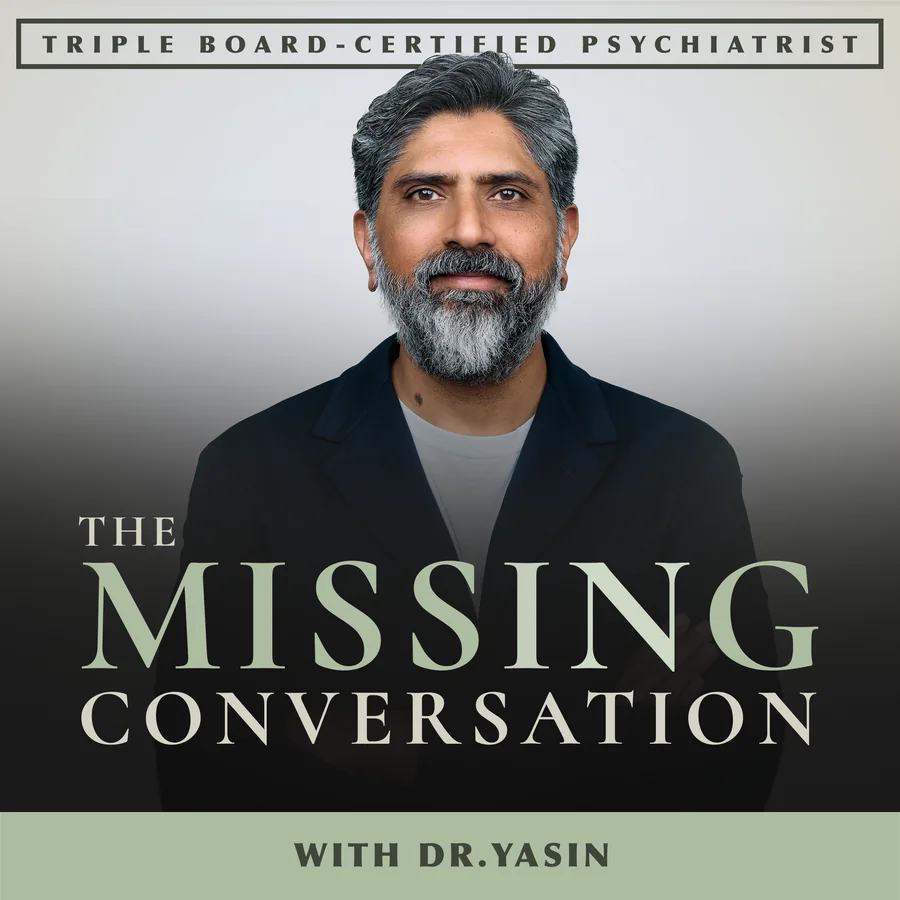 New Series
with Dr. Yasin
The conversation mainstream psychiatry keeps leaving out: nervous systems, neurodivergence, and the honest reframe of what you were told was wrong with you.
The Nervous System
Self-Medication
Neurodivergence
Re-Alignment
Misdiagnosis
The Newsletter
An occasional letter on nervous systems, neurodivergence, and the reframes that change everything. Quiet, clinical, and never noisy. Unsubscribe anytime.
Free, on Substack. No spam. Unsubscribe anytime.
Recent Discoveries
On Misdiagnosis
On Masking
On Regulation
On the System
Questions, Answered
Plain answers, in Dr. Yasin’s clinical voice. Educational only, not a diagnosis or a substitute for individual care.
It means many high-functioning people who have been labelled treatment-resistant are not malfunctioning. They have a sensitive, high-reactivity nervous system that was never explained to them. The symptoms are real, but they are often an intelligent response to environment and history rather than a sign that something is fundamentally wrong with the person. Understanding how your nervous system actually works is usually the first step that makes treatment finally fit.
Self-medicating is using a substance or behaviour to force a dysregulated nervous system back toward calm or focus, and it works in the short term, which is exactly why it is so hard to stop. Self-regulating is building the internal capacity to reach that same state without numbing. The aim of treatment is not willpower; it is giving the nervous system other ways to get what the substance was providing.
Yes. Developmental and relational trauma can present as mood instability, flatness, irritability, or cycles that resemble depression or bipolar disorder on a checklist. When the underlying nervous-system and trauma history are missed, the diagnosis, and the treatment, can miss with it. This is educational information, not a diagnosis; an evaluation with a qualified clinician is the only way to know.
For some people, medication reduces the lows but also blunts the highs, leaving an emotional flatness that can feel like living behind glass. That response is worth taking seriously and discussing with your prescriber, because it can signal that the medication, the dose, or the underlying picture needs to be reconsidered. Never stop or change a psychiatric medication without medical supervision.
Often, yes. Reaching for alcohol to take the edge off, to sleep, or to feel normal is frequently a nervous system trying to regulate a state it cannot settle on its own. The drinking is usually the smoke alarm, not the fire, which is why treating only the behaviour, without the underlying dysregulation, tends to fail.
It describes people who perform and achieve at a high level while quietly carrying an enormous internal cost: a reactive, high-performance system that looks fine from the outside. The exhaustion usually comes from the performance of “normal,” not the work itself. High-functioning is not the same as well, and it is often the reason these patients are overlooked.
Ten minutes to understand what your nervous system has been trying to tell you.
Dr. Yasin Choudry, MD · Board-Certified